

Materials & Features
Deck Features & Add-Ons in Charlotte, NC
Deck lighting, railing, skirting, and under-deck drainage in Charlotte, NC. The finishing systems that make a deck safer, drier, and easier to enjoy.
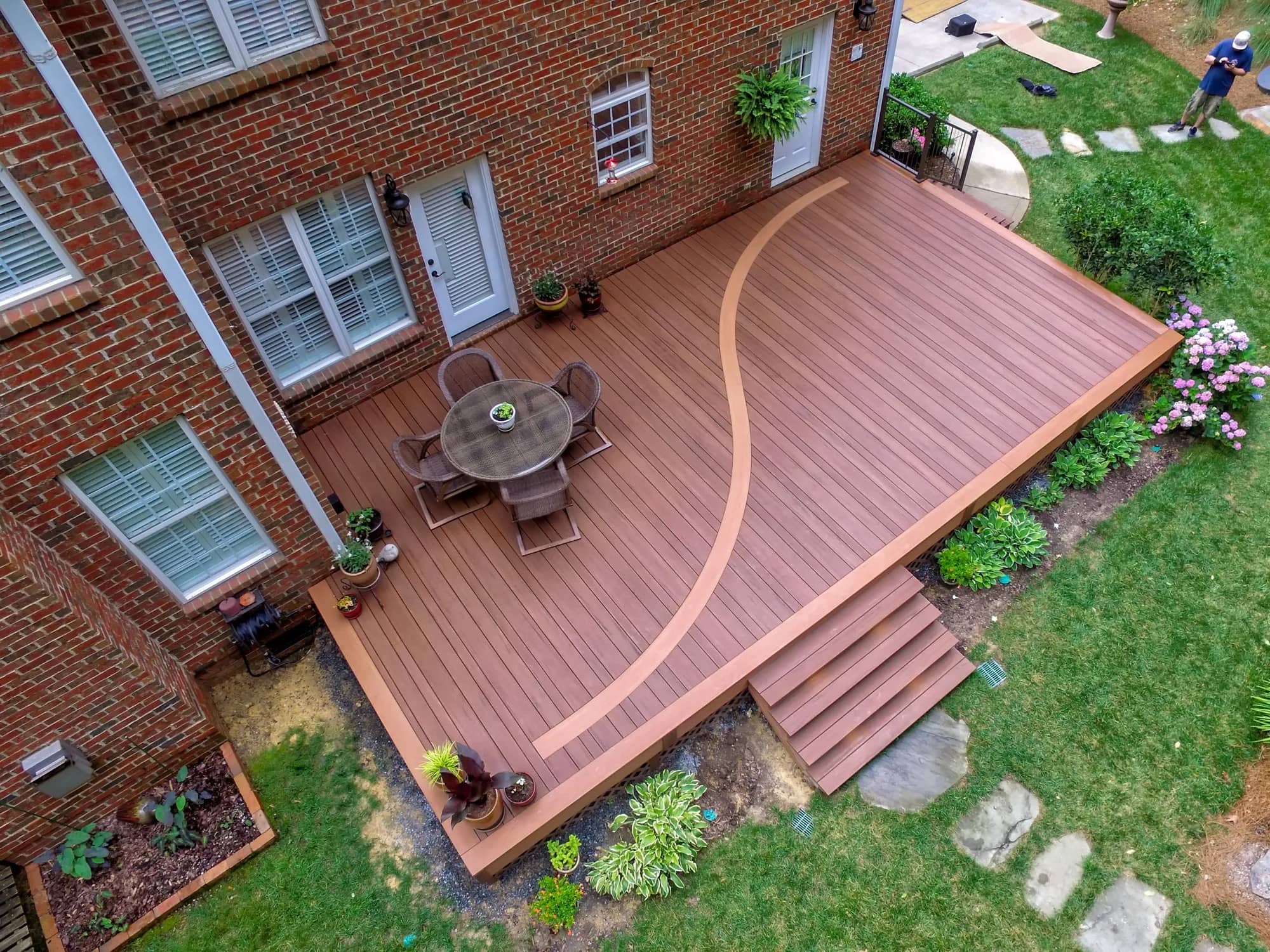
The difference between a deck and a finished outdoor room is in the systems around the boards: railing you actually like looking through, lighting that keeps the space alive after sunset, skirting that hides the framing, and drainage that turns the area underneath into usable space. We install all of these — as part of new builds, and as upgrades to structurally sound existing decks.
Railing is the feature you touch every day and see from every angle. Options range from composite post-and-picket systems that match your decking, to powder-coated aluminum balusters, to stainless cable rail and glass panels for decks with a view worth keeping open. Every system we install meets residential code for height and strength, and many clients add a drink rail cap — a flat composite top wide enough for a glass — at little extra cost.
Low-voltage LED lighting is the highest-impact upgrade per dollar we install. Recessed riser lights make stairs safe in the dark, post cap and under-rail lights give the deck a warm perimeter glow, and everything runs on a transformer with a timer or smart control. Wiring is dramatically easier during construction, but we retrofit existing decks routinely by running wire beneath the frame.
Under-deck drainage is the sleeper feature for elevated decks. A ceiling system beneath the deck catches water that drips between the boards and channels it to a gutter, keeping the space below genuinely dry. On a walk-out basement home — common across Charlotte's sloped lots — that converts the dead zone under the deck into a covered patio for seating, a hot tub, or dry storage.
Skirting and fascia finish the look. Horizontal slat skirting, framed lattice, or solid panels close off the under-deck area, keep critters from nesting beneath low decks, and make the whole structure read as intentional. We ventilate skirted areas properly so the framing stays dry — a detail that matters in our humidity.
Most feature work on an existing deck doesn't require a permit, though railing changes must still meet code and we'll flag anything structural we find while we're under there. If you're planning a new deck with us, we'll design these systems in from the start — it's cheaper and cleaner than adding them later. Either way, tell us how you use the deck and we'll recommend the features that earn their cost.
Find the right fit for your budget
Areas We Serve
Popular neighborhoods for this project
We build throughout the Charlotte metro — these are the areas homeowners most often hire us for this service.
Good To Know
Deck Features & Add-Ons FAQs
Can you add these features to a deck you didn't build?
Yes — railing swaps, lighting, skirting, and under-deck drainage are all common retrofits. We start by checking that your deck's structure is sound, since new railing must anchor to solid framing to meet code. If we find issues underneath, we'll show you photos and give you options before any feature work starts.
Which deck railing should I choose?
It depends on budget and the view. Composite picket systems match your decking and cost the least; powder-coated aluminum looks slimmer and lasts decades; cable and glass keep a view open but cost the most. All of them meet residential height and strength codes when properly installed. We bring samples so you can compare in person.
How does under-deck drainage work?
A sloped ceiling system installs beneath the deck frame, catching water that drips between the boards and carrying it to a gutter and downspout at the edge. The space below stays dry enough for furniture, a TV, or a hot tub. It's most cost-effective installed during construction, but we retrofit elevated decks regularly.
Is deck lighting expensive to run or maintain?
No — modern systems are low-voltage LED, so an entire deck's lighting typically draws less power than a single old floodlight. Fixtures are rated for outdoor use and last for years, and a transformer with a timer or smart plug means the lights handle themselves. The main cost is installation labor, which drops a lot when wired during the build.
Do I need a permit to replace my deck railing in Charlotte?
A straightforward like-for-like railing replacement generally doesn't require a separate permit in Mecklenburg County, but the new railing still must meet residential code — 36-inch minimum height and strength requirements — and structural repairs discovered along the way can change the picture. We confirm requirements before starting any project.
Before you build
Riser, post-cap and under-rail lighting in detail, including why the conduit run has to happen while the framing is open.
Composite lines carry their own railing systems. Pairing them deliberately is the difference between finished and assembled.
Deck lighting and outlets are inspected separately from the structure. Where that fits in the Charlotte permit sequence.
Visit or call our Charlotte shop
Open Air Construction builds decks, porches, and outdoor living structures throughout the Greater Charlotte metro.
Ready to start your Deck Features & Add-Ons project?
Serving homeowners across the Charlotte Metro area.